Syncloop API Development Platform: Sequences
In the Syncloop API Development Platform, Sequences are used to model structured APIs. A Sequence is a separate block that wraps up homogenous tasks, providing a block-level view of the statements. It allows for a top-down view of the service, built on various blocks or structures. Each block or structure can be accessed separately for better statement clarity, reducing the complexity of reading the service.
Sequences can also be nested within other Sequences. These nested Sequences, called conditional sequences, can be controlled based on a condition. The statements under a conditional sequence are executed only when the specified condition is true. The condition is specified using the "condition" option provided in the properties dialog. For every conditional sequence, the parent sequence's condition evaluation on sub-steps needs to be enabled/checked.
Creating a New Sequence
To create a new sequence:
Right-click on the workspace.
Select "Sequence" from the options.
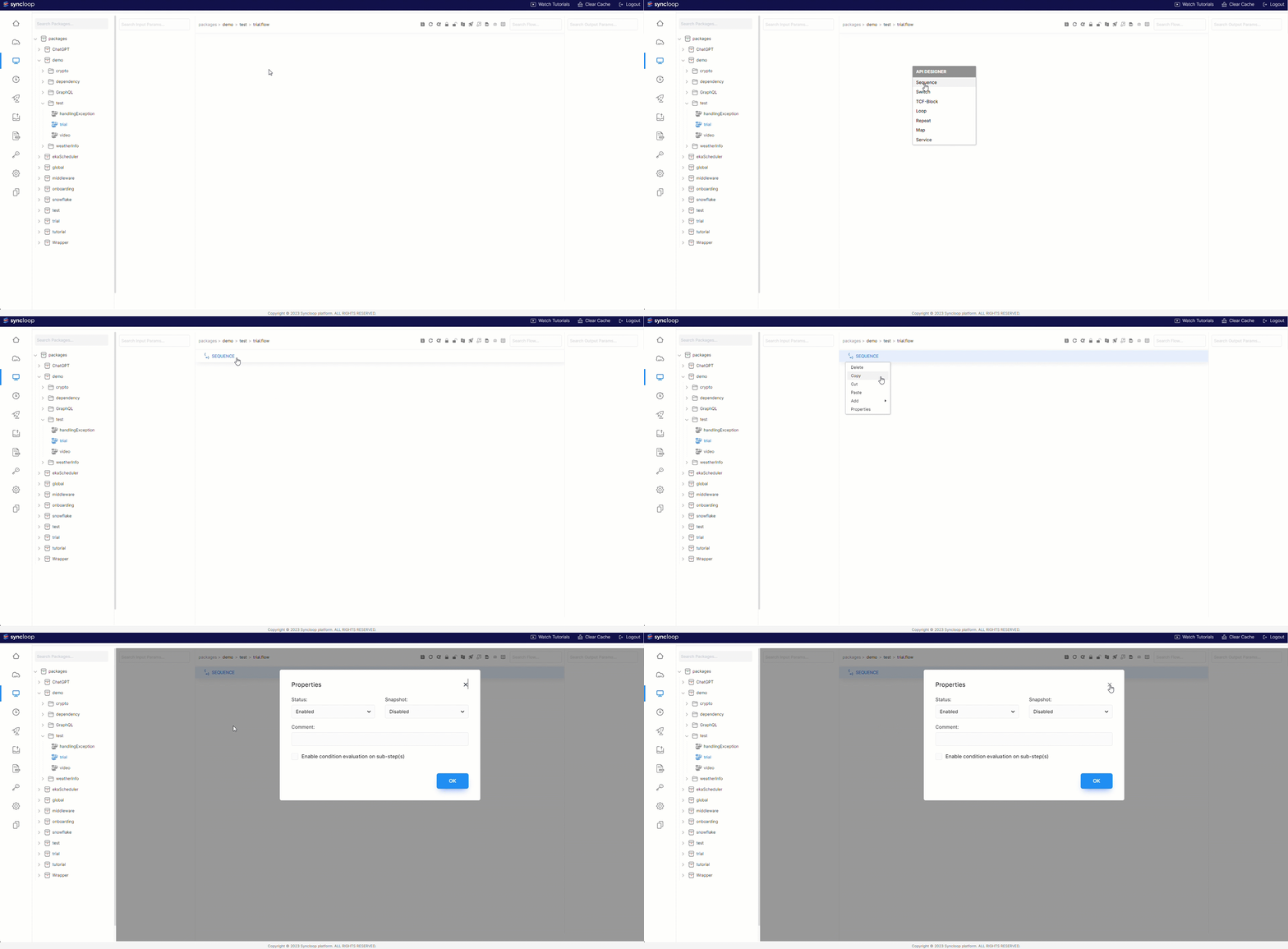
Sequence Properties
The following properties can be set for a sequence:
Status:
Enable/Disable the sequence.
The default status for a sequence is enabled.
If the status is set to disable, the sequence and its child sequences will not execute when the API is invoked, either from HTTP or another service.
Snapshots:
- Create a runtime data state snapshot for the sequence step.
Comment:
Add a comment to the sequence step.
Comments will be displayed with the sequence step in the workspace.
Enable condition evaluation on sub-steps:
When enabled, nested sequences will be evaluated for a condition.
Only when the condition is true, the nested sequences will be executed.
This feature aids in controlling each nested sequence.
Condition:
Specifies the condition that needs to be true for the statements under the sequence to be executed.
This property works only in child sequences.
To learn more about Syncloop Sequences, you can watch the video below: